
Tarot is an ancient practice that combines intuition, self-knowledge and spirituality. Although some people think of tarot as a religion, tarot is not actually a religion, but rather a spiritual practice. Although often associated with fortune-telling, its role goes much further, offering a path to personal growth and a deeper understanding of ourselves and the world around us. This article explores the various tarot dimensions, from its magic and usefulness as a tool for self-knowledge to its relationship with religion, demystifying concepts and highlighting stories of personal transformation.
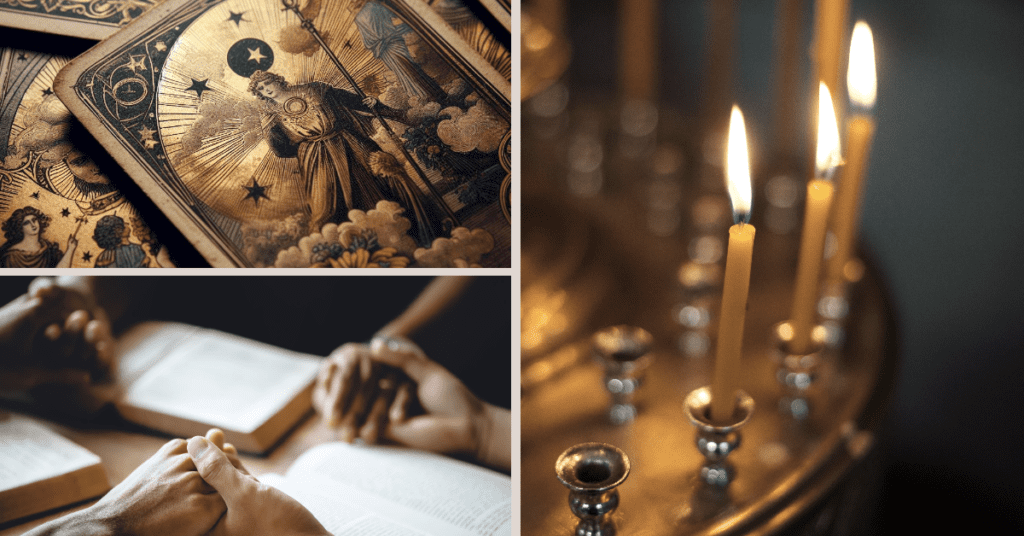
When you delve into the world of tarot, you come across a set of 78 cards, divided between the Major Arcana and the Minor Arcana. This division is crucial to understanding the depth and breadth of the messages that each card can convey. Each card is a separate universe, full of symbolism and meanings waiting to be explored.
To begin this discovery, it is important to familiarize yourself with the basic structure of the tarot:
By dedicating yourself to studying the cards, you open the door to a path of self-knowledge and personal transformation. Learning to read the tarot is not just about memorizing meanings, but rather developing an intimate connection with the cards, allowing intuition to guide each reading.
Constant practice and openness to listening to what the cards have to say are essential to deepen your understanding and ability to interpret the messages they convey. With patience and dedication, the magic of tarot reveals itself, allowing you to make transformative discoveries about yourself and the world around you.
Intuition plays a crucial role in tarot reading, serving as a bridge between knowledge of the cards and a deep understanding of the messages they convey. It is essential to trust your own intuition to interpret the cards in a way that truly resonates with both the reader and the receiver.
To develop this skill, you need to practice and be open to listening to what your intuition has to say, even if it sometimes seems to defy logic.
Here are some steps to nurture and develop intuition in the context of tarot:
Remember that each reading is an opportunity for growth and self-knowledge, allowing both the reader and the client to explore paths of healing and personal transformation.
By diving into the world of tarot, you discover a powerful tool for self-knowledge and inner healing. Unlock your unique gifts and make transformative discoveries, becomes an exciting and enriching journey. Learning to interpret the 78 cards, trusting your intuition and choosing the right spreads may seem challenging at first, but with practice and dedication, it can be a deeply rewarding experience.
By developing your connection with the tarot, you open yourself to a new reality, more conscious and balanced, guided by your Higher Self.
Here are some tips to help you on this journey:
Each step you take in this direction not only helps you understand yourself better, but also empowers you to help others on their journeys of self-discovery. Practicing tarot is an open door to personal and spiritual growth, allowing you to co-create a future that is aligned with your inner needs and the external universe.
When you delve into the world of tarot, you discover a unique bridge between the physical and the spiritual. This connection is not limited to just the act of throwing the cards, but extends to the way in which we interpret and integrate the messages received into our daily lives. It is a path of personal discovery, where each card serves as a mirror of the soul, reflecting desires, fears and potential.
When practicing tarot, one must be open to receiving guidance that goes beyond the tangible, allowing intuition to guide you with each reading.
Here are some tips to deepen this spiritual connection:
By following these steps, you strengthen your connection with the tarot, transforming it into a powerful ally on the path to self-knowledge and spiritual growth.
In the search for answers, tarot presents itself as a powerful tool, capable of illuminating paths and offering perspectives that often go unnoticed. The key is to learn to listen to the messages that the cards reveal., allowing intuition to guide interpretation.
On your journey with tarot, it is essential to keep an open mind and a receptive heart to welcome the guidance that arises.
Here are some steps to help you get started:
Each tarot reading is an opportunity for growth and self-knowledge, opening doors to a deeper understanding of yourself and the world around you.
In modern society, tarot takes on a multifaceted role, serving both as a tool for introspection and self-knowledge, as well as a means of entertainment. Its relevance transcends the barriers of time, adapting to contemporary needs for personal and spiritual understanding.
Tarot offers a mirror to the soul, reflecting not only desires and fears, but also potential paths for personal growth.
It should be noted that the practice of tarot, despite its ancient origins, continues to evolve, integrating harmoniously into the fast pace of modern life. Its ability to offer unique perspectives on life's issues makes it a valuable tool for many, regardless of their spiritual or religious beliefs.
Getting started in the world of tarot is an exciting journey of self-discovery and spiritual connection. It is essential to choose a deck that you identify with., as this will facilitate your connection with the cards and make the readings more intuitive and meaningful.
Here are some initial steps you should consider:
Remember that practice makes perfect. Don’t worry if your first few readings aren’t perfect. With time and practice, you will develop greater confidence and accuracy in your interpretations.
Developing a connection with tarot is a process that goes beyond the simple act of memorizing the meanings of the cards. It is necessary to delve deeply into self-knowledge and intuition to truly understand the messages that tarot is trying to convey. This path can be both challenging and rewarding, as it opens doors to a deeper understanding of yourself and the universe.
To get started, here are a few simple steps:
Remember that each card has a story to tell and that by developing a connection with the tarot, you are also developing a connection with yourself. This is a path of personal discovery that allows you to access deep wisdom and inner guidance.
To achieve more accurate and meaningful tarot readings, you need to pay attention to a few key points. First, a calm and distraction-free environment should be created, where you can fully concentrate on the reading. This helps you connect with your intuition and the energies of the cards.
Remember that practicing tarot is a personal journey of discovery and self-knowledge. There is no magic formula for perfection, but with dedication and patience, you can improve your ability to read and understand the cards.
By diving into the world of tarot, you discover a powerful tool for self-knowledge and personal transformation. Each card has the ability to reveal hidden aspects of your life., helping you to better understand your paths and choices.
By developing your connection with the tarot, you open yourself up to a path of self-discovery, where each reading can be a step towards a new understanding of yourself and the world around you.
Here are some key points to make the most of the power of tarot in your life:
Remember that tarot is not just a means of predicting the future, but rather a way of better understanding the present and guiding yourself towards a future that is more aligned with your inner desires and needs.
The magic of tarot does not lie only in predicting the future, but in its ability to unlock self-knowledge and promote profound inner transformation. By diving into the cards, you discover keys to inner healing., redefining past events and co-creating a future more aligned with your internal needs and the external universe.
Enjoy this opportunity for inner growth, which can transform your life and lead you to help others on their journeys of self-discovery.
Here are some steps to begin this transformation through tarot:
Each of us has unique gifts, and tarot offers a way to unlock them, fostering transformative discoveries. By developing a deeper connection with tarot, you open yourself up to a journey of self-discovery, connected and guided by your Higher Self, which will guide you in manifesting a new reality, one that is more conscious, responsible and balanced.
When you delve into the testimonies of those who have consulted tarot, it’s easy to see the profound impact these readings can have on people’s lives. From predictions that come true to life-changing advice, the range of experiences is vast and inspiring.
Here are some of the most common comments shared by consultants:
It is essential to keep an open mind and a heart ready to receive the messages that the tarot has for you. After all, each reading is a window to self-knowledge and a deeper understanding of your path in life.
If you are thinking about consult the tarot, Remember that your approach and willingness to listen can profoundly influence the experience. The connection with tarot is unique to each person, and the testimonials above are just a glimpse into the transformative potential of these readings.
When approaching the relationship between tarot and religion, it is necessary to understand that tarot operates in a domain that transcends the traditional boundaries of religion. Tarot serves as a tool for self-knowledge and introspection, not necessarily being linked to any specific religious dogma or practice.
Tarot allows us to explore aspects of our life and personality that often remain hidden or unrecognized.
Here are some key points to better understand this relationship:
Therefore, when considering tarot as a spiritual practice, one must respect the diversity of beliefs and understand that tarot does not fit strictly into the concept of religion, but rather, into a sphere of personal and spiritual development.
When approaching tarot as a spiritual practice, it is necessary to recognize that this tool transcends the barriers of religion, offering a path to self-knowledge and connection with the Higher Self. It's not about following specific dogmas or rituals, but rather to explore one's own spirituality in a free and personal way.
By delving into the depths of the tarot, you discover a universe of possibilities for inner growth and a deeper understanding of yourself and the world around you.
Here are some best practices for anyone wanting to explore tarot from this perspective:
Each person has the freedom to interpret the cards in their own way, allowing for a unique journey of discovery and personal transformation.
In the world of tarot, it is essential to respect the diversity of beliefs and practices. Each person has their own spiritual journey, and tarot can be a valuable ally on this path, regardless of each person’s religious or spiritual context.
The practice of tarot is not limited to a single truth or spiritual path. It offers an open space for personal exploration and growth.
Here are some tips to ensure that you respect the diversity of beliefs in tarot:
By following these tips, you contribute to an inclusive and respectful environment where everyone can explore the potential of tarot for self-knowledge and spiritual guidance.
Yes, many believe that tarot can help unlock unique gifts and provide transformative discoveries by allowing a deep dive into self-knowledge and intuition.
Not necessarily. While there are no studies that consistently prove tarot’s accuracy, many people find value and guidance in readings, regardless of their beliefs about the magic of the cards.
Yes, for many, tarot is a spiritual tool that allows them to explore aspects of life and being in a deeper way, although it is not necessarily linked to a specific religion.
Beginners can start by exploring practical and educational guides that explain the meanings of the cards, spreads, and offer tips for developing a deeper connection with the tarot.
Yes, there are many reports of people who have experienced significant transformations in their lives through the practice of tarot, whether in terms of self-knowledge, inner healing or guidance for important decisions.
Yes, tarot is a practice accessible to anyone interested in exploring its cards and meanings, regardless of their previous experience or spiritual beliefs.